How to Sell a Comic or Toy Collection: Inherited or Personal
Maybe it's the comics you bought off the spinner rack as a kid, or the toys still boxed up in your parents' garage. Or maybe you've inherited a collection from someone you loved. Either way, you probably have two questions: Is any of this worth anything? And who can I trust to tell me? This guide walks you through both. There's no pressure and no sales pitch. Some collections are best sold on eBay, some at auction, and some to a buyer like me. My goal is to help you pick the right one.
Step 1: Pause and protect it
The biggest value losses happen before anyone knows what they have.
- Don't clean, tape, or repair anything. Even well-meant fixes can lower value.
- Leave comics in their bags and boards. Handle loose books by the edges, supported flat.
- Keep toys in their packaging. A sealed box is often worth far more than the toy inside.
- Store it cool, dry, and out of sunlight. Attics, garages, and basements are the usual culprits for heat, humidity, and pests. If your collection has spent decades in one of them, move it somewhere better now.
Step 2: Take stock
You don't need to catalog every item. A rough picture is enough to get good advice.
- Roughly how many items (for example, "about 6 long boxes")
- The oldest cover dates you can find
- Main publishers or toy lines (Marvel, DC, Star Wars, G.I. Joe, and so on)
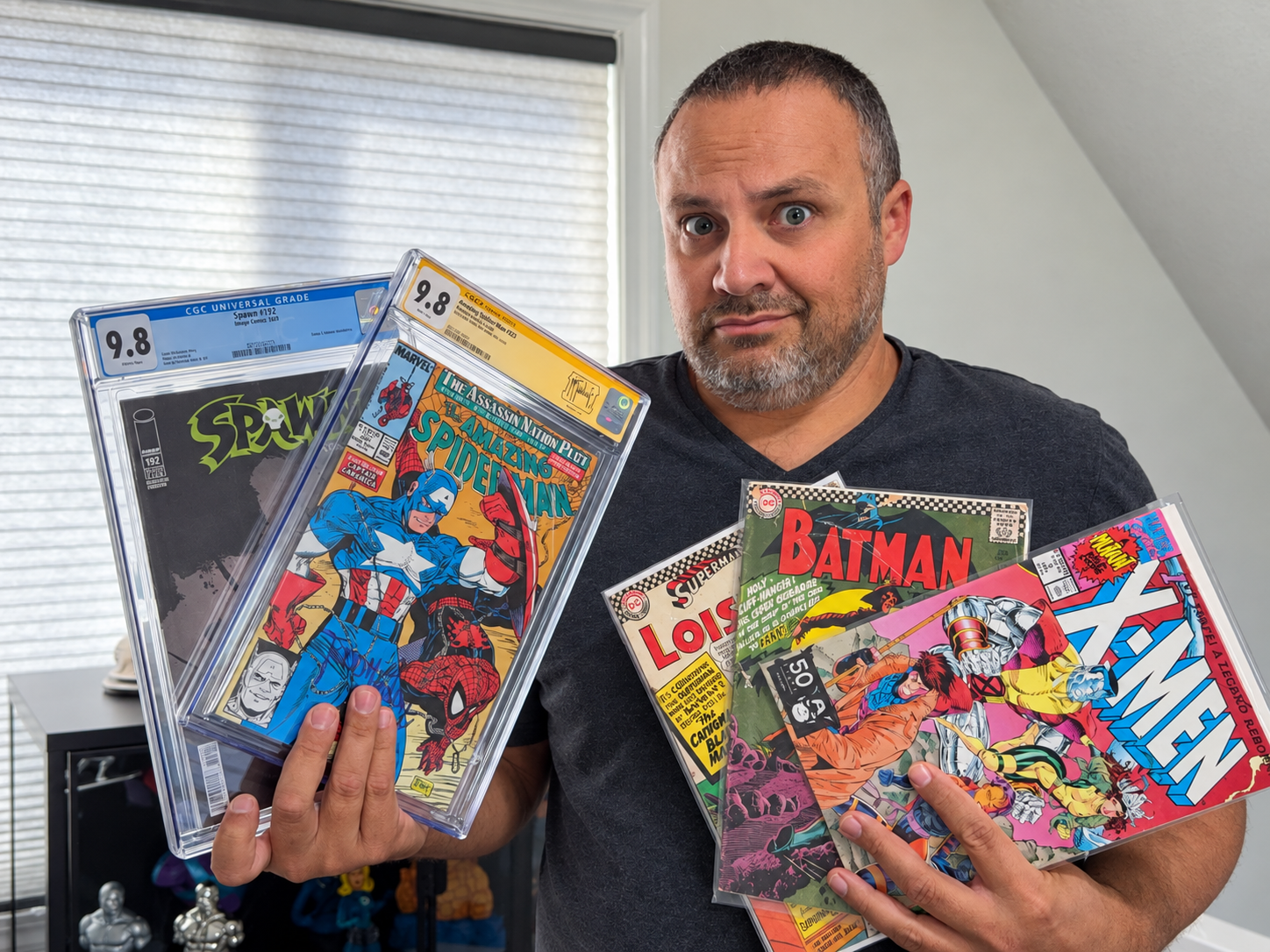
- Anything already professionally graded (sealed in a hard plastic case with a label)
- Clear photos of the 10 oldest or best-looking items, front and back
Step 3: Get a realistic sense of value
Age alone doesn't make something valuable. Value comes from demand, scarcity, and condition.
- Older comics (roughly pre-1970) are more likely to carry value, especially in good condition.
- Comics from the late 1980s and 1990s were printed in huge quantities, and many people saved them. Most are worth a few dollars or less, but key issues and first appearances can be exceptions.
- Nostalgia and market value aren't the same thing. The items that meant the most to you may not be the ones buyers want most, and the reverse is true too.
- Check eBay sold listings, not asking prices. On eBay, filter by Sold Items to see what buyers actually paid. Variants and subtle differences between items can be difficult to discern, and condition is a critical factor.
- Price guides and tools such as the Overstreet Comic Book Price Guide and GoCollect can help with key books.
Step 4: Choose how to sell
| Option | Best for | What it costs you | Time and effort |
|---|---|---|---|
| eBay (sell it yourself) | Mid-value individual books and toys | Platform fees on each sale, plus shipping supplies | High: photos, listings, packing, buyer questions |
| Auction house (e.g., Heritage Auctions, ComicConnect) | High-value keys and graded books | Seller commission, which varies by house and item value | Medium: they handle sales; payment can take months |
| Consignment at a local shop | Mid-value books if you're patient | A percentage of each sale, set by the shop | Low effort, slow payout |
| Local comic shop buyout | Small or mid-size collections, quick sale | Shops pay below retail because they must resell | Low: one visit |
| Collection buyer (like Cosmic Stash) | Whole collections, estates, anyone who wants it handled | You trade some top-end value for speed and convenience | Lowest: one visit or shipment, paid at once |
| Professional grading (CGC or CBCS) | High-value books before selling | Per-book fees plus shipping and wait time | Medium: worth it mainly for valuable books |
My honest take: If you have a few high-value books, consider auctioning or grading those separately and selling the rest as a group. If you want the whole collection handled at once, a buyer is usually the simplest path.
Step 5: Avoid the common mistakes
- Letting someone cherry-pick. Selling only the best books to one buyer can leave the rest hard to sell.
- Dealing with a buyer who won't explain their offer. A trustworthy buyer will tell you how they arrived at the number.
- Shipping valuable items uninsured. Always insure and track.
How I can help
Send me a few photos and I'll tell you what you have and your best way to sell it, even if that isn't to me. No cost, no obligation.
Send Me PhotosWant a printable version of these steps? Get the free Before You Sell checklist
Common questions
Do I need to know what I have before I reach out?
No. Photos and a rough description are plenty.
Will you really tell me to sell somewhere else? Yes. If eBay or an auction house are a better fit, I'll say so.
Do you only buy in Oregon?
No. I buy locally in Oregon and Southwest Washington, accept shipped collections from anywhere in the U.S., and travel for the right collection.